
Overview of Study Options in Portugal
The Portuguese higher education system is organized into a binary system comprising university education and polytechnic education. This structure is designed to offer both theoretical-based academic research and practical-based vocational training. For foreign nationals moving to Portugal in the 2025/2026 academic year, understanding these distinctions is essential for selecting the appropriate visa and residency path.
Portugal follows the Bologna Process, ensuring that degrees are recognized across the European Higher Education Area (EHEA). This makes the transition for students moving between European countries seamless, while offering a standardized framework for students coming from outside the European Union.
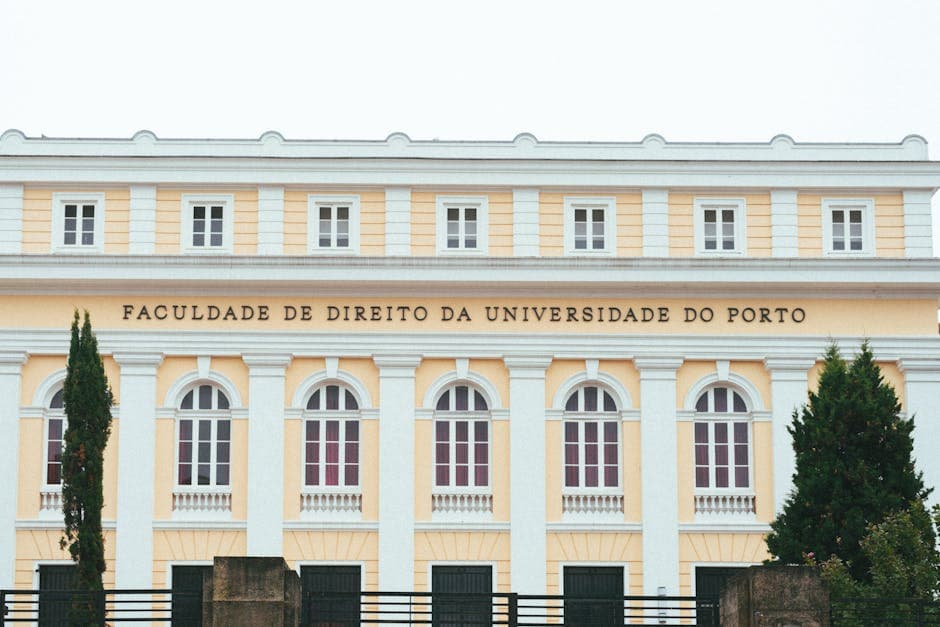
Types of Higher Education Institutions
Educational institutions in Portugal are divided into two main categories, each with a distinct focus:
- Universities (Ensino Universitário): These institutions focus on academic research and theoretical learning. They are the only institutions authorized to grant Doctoral degrees (PhDs). They are ideal for students pursuing careers in science, law, medicine, and deep humanities research.
- Polytechnics (Ensino Politécnico): These institutions focus on practical, technical, and vocational training. They prepare students for specific professions in fields like engineering, nursing, teaching, and management. While they grant Bachelor’s and Master’s degrees, they generally do not grant PhDs.
Both types of education are provided by both public and private institutions. Public institutions generally have more competitive entry requirements for local students, while private institutions may offer more flexible enrollment for international applicants.
Degree Cycles and Levels
Higher education in Portugal is structured into three distinct cycles, as defined by the Directorate-General for Higher Education (DGES):
First Cycle: Licenciatura (Bachelor’s Degree)
The Licenciatura typically lasts 3 to 4 years (180 to 240 ECTS credits). In polytechnics, the focus is on professional expertise, whereas in universities, the focus is on broad scientific knowledge. For the 2025/2026 period, tuition fees for international students in public universities typically range from 1,500 EUR ($1,650 USD, Jan 2026) to 7,000 EUR ($7,700 USD, Jan 2026) per year, depending on the program.
Second Cycle: Mestrado (Master’s Degree)
The Mestrado lasts 1.5 to 2 years (90 to 120 ECTS credits). It requires the completion of a dissertation, a project work, or a professional internship report. Integrated Masters (Mestrado Integrado) also exist for professions like Medicine and Architecture, combining the first and second cycles into a 5 to 6-year program.
Third Cycle: Doutoramento (Doctorate)
The Doutoramento is an advanced research degree. There is no fixed duration, but it typically takes 3 to 4 years. It requires the defense of an original thesis. Costs vary significantly by research field and institution.
Alternative and Short-Term Study Options
Not all educational paths in Portugal lead to a full degree. Many foreigners utilize shorter or more specific programs:
Portuguese Language Courses (PLE)
For residency or citizenship requirements, many students enroll in Português Língua Estrangeira (PLE) courses. These are offered by university language centers and the Camões Institute. Prices for a semester-long course often start around 350 EUR ($385 USD, Jan 2026).
CTeSP: Higher Professional Technical Courses
These are 2-year programs (120 ECTS) offered by polytechnics. They do not grant a degree but provide a Level 5 professional certificate and credits that can be used later to transition into a Bachelor’s degree. This is a common route for those seeking immediate technical employment.
Exchange Programs
The Erasmus+ program remains the primary vehicle for European students. Non-EU students can often access similar mobility through bilateral agreements between their home university and a Portuguese institution.
Practical Considerations for Foreigners
Enrollment processes differ based on your nationality and residency status:
- International Student Statute: If you are not an EU citizen and have not lived in Portugal for more than two years, you fall under this statute. This means you may have a specific entry quota and different tuition rates than domestic/EU students.
- Language Requirements: While more English-taught Master’s programs are appearing, most Bachelor’s degrees are taught in Portuguese. A B1 or B2 level of proficiency is usually required.
- Deadlines: Applications for international students often open earlier than the general national application, frequently starting in January or February for the September intake.
Note: Always verify the recognition of your previous diplomas through the NARIC Portugal portal before starting the application process.