
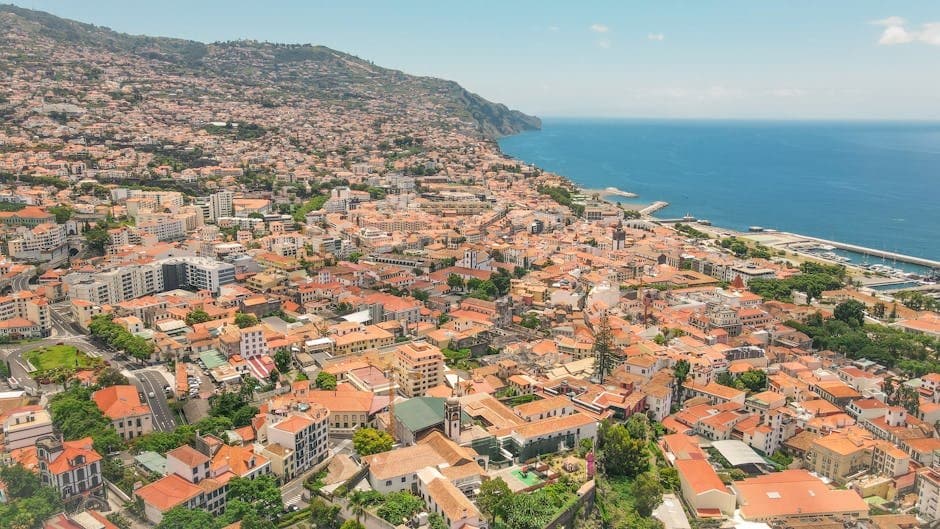
Overview of Funchal
Funchal is situated on the southern coast of Madeira Island. The city is built into a natural amphitheater, with urban development extending from the sea level up to elevations of approximately 800 meters. As of 2025, the city remains the most densely populated area in the autonomous region, hosting a significant portion of the island's infrastructure and services. The climate is Mediterranean-subtropical, characterized by mild temperatures year-round, typically ranging between 16°C in winter and 25°C in summer.
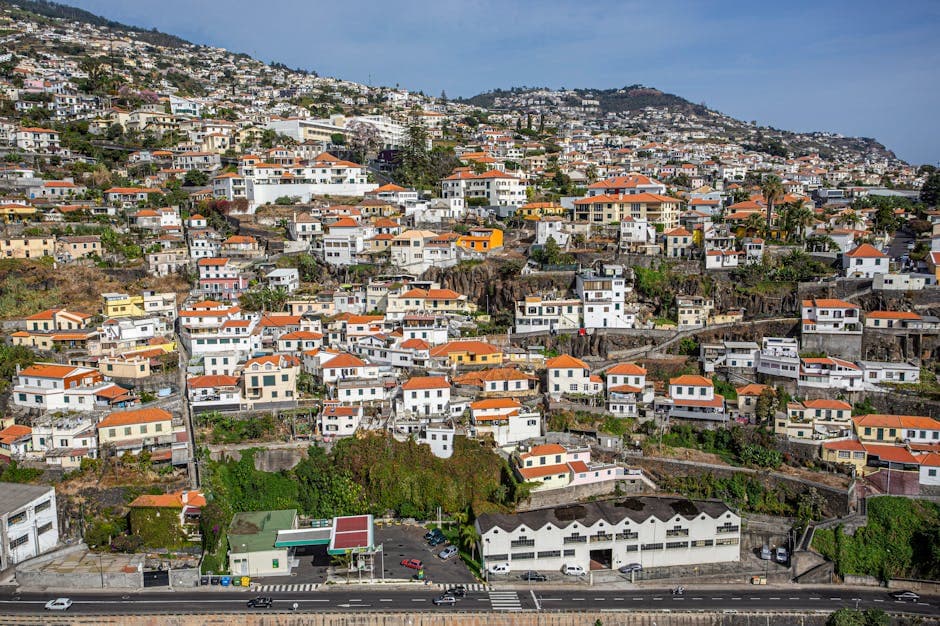
Transportation and Connectivity
Public transportation within the city is managed primarily by Horários do Funchal, which operates an extensive bus network covering the urban center and suburban hills. For intercity travel across the island, companies such as Rodoeste and SAM provide long-distance coach services. The Cristiano Ronaldo International Airport (FNC) is located approximately 20 kilometers east of the city center, offering direct flights to major European hubs including Lisbon, London, and Berlin. Within the city, the use of taxis and ride-sharing platforms like Bolt is common, though the steep terrain often makes walking challenging outside of the flat coastal strip.
Neighborhoods and Districts
Funchal is divided into several distinct parishes (freguesias), each offering different residential characteristics:
Sé
The historic and commercial heart of the city. It contains the Funchal Cathedral, major government buildings, and high-density commercial zones. Residential options here are primarily renovated apartments.
São Martinho
Located to the west, this is the main tourist and modern residential district. It includes the Ajuda and Estrada Monumental areas, featuring modern apartment complexes, shopping malls, and proximity to the Lido bathing complexes.
Santa Luzia and Imaculado Coração de Maria
These uphill districts offer more traditional housing and views of the bay. They are popular with local families and provide a quieter environment while remaining within walking distance of the center.
Monte
Situated at a higher altitude, Monte is known for its cooler temperatures and lush vegetation. It is accessible via cable car or steep winding roads and features older quintas (manor houses).
Cost of Living and Real Estate
The cost of living in Funchal is higher than in rural Madeira but generally lower than in Lisbon or Porto. As of early 2026, the real estate market has seen sustained demand from international buyers and digital nomads. Average rent for a one-bedroom apartment in the city center is approximately 1,200 EUR, while prices in peripheral parishes may range from 850 EUR to 1,000 EUR. Utility costs, including electricity, water, and high-speed fiber internet, typically average between 120 EUR and 180 EUR per month for a standard household. Grocery prices are influenced by the island's geography, with imported goods costing more than local produce found at the Mercado dos Lavradores.
Healthcare and Education
Residents have access to the public healthcare system (Serviço Regional de Saúde - SESARAM), with the Hospital Dr. Nélio Mendonça serving as the primary regional facility. Private healthcare options are also available through clinics such as Hospital Particular da Madeira. For education, Funchal hosts the University of Madeira (UMa) and several international schools, including the Madeira International School, which follows the British curriculum.