
Overview of Higher Education Admissions
The Portuguese higher education system is divided into two main categories: University education, which focuses on theoretical research and academic fields, and Polytechnic education, which emphasizes practical and vocational training. For foreign nationals, the admission process is primarily governed by the Estatuto do Estudante Internacional (International Student Statute).
Under this statute, an "International Student" is defined as any applicant who does not possess Portuguese citizenship or citizenship of a European Union member state. However, foreign nationals who have legally resided in Portugal for more than two years (continuously) by August 31st of the year they intend to enroll are generally eligible to apply through the same national contest as Portuguese students (Contingente Geral), which often results in significantly lower tuition fees.
Applications for undergraduate programs (Licenciatura) and integrated masters are usually handled directly by the individual institutions for international students, rather than through the central national placement system used by domestic students.
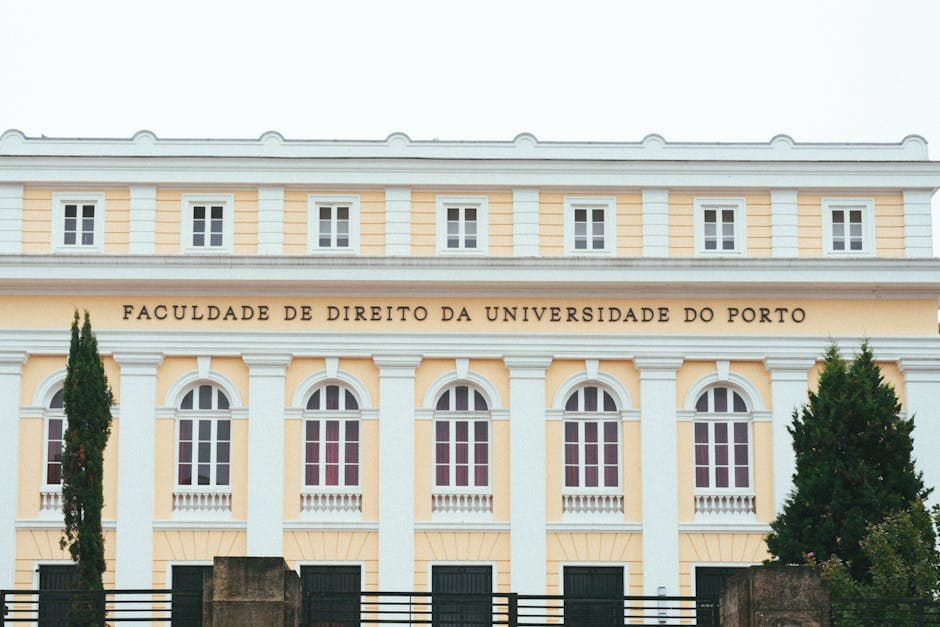
The Application Process for International Students
The admission cycle in Portugal typically consists of three distinct phases. It is highly recommended to apply during the first phase, as most vacancies are filled early in the year. The process follows a structured sequence of administrative steps:
- Selection of Institution and Course: Applicants must verify if their chosen university or polytechnic offers specific quotas for international students. You can research programs via the Directorate-General for Higher Education (DGES) website.
- Verification of Entry Exams: Most institutions require proof of academic qualification. This may include results from the applicant's home country national exams (e.g., SAT, IB, A-Levels) or specific entrance exams organized by the Portuguese university.
- Language Proficiency: Since the majority of undergraduate courses are taught in Portuguese, institutions often require a B1 or B2 level certificate (CAPLE). Some English-taught programs require TOEFL or IELTS scores.
- Online Application Submission: Applications are submitted through the institution's official portal. This usually involves uploading digitized documents and paying an application fee.
Note: Admission requirements vary between institutions. Some may require a digital interview or a portfolio for arts-related programs.

Required Documentation and Legalization
To ensure a valid application, all foreign documents must be officially translated into Portuguese (if not already in Portuguese, English, French, or Spanish, depending on the university) and legalized. Legalization is typically done through the Hague Apostille or at a Portuguese consulate in the country of origin.
Standard Document Checklist
- Passport or National ID: Valid for at least six months beyond the application date.
- High School Diploma / Secondary Education Certificate: Must be equivalent to the Portuguese secondary education system.
- Transcript of Records: Detailed list of subjects and grades obtained.
- Declaration of Equivalence: Issued by a Portuguese secondary school or the DGES, confirming the foreign grade scale corresponds to the Portuguese 0-20 scale.
- Proof of Language Proficiency: Official certificate (e.g., DEPLE, DIPLE, or IELTS/TOEFL for English programs).
- Motivation Letter and CV: Required by some competitive programs or master’s degrees.
Fees and Costs
The costs associated with the admission process are non-refundable and vary by institution. For the 2025/2026 academic cycle, the following estimated costs apply:
- Application Fee: 100 EUR to 150 EUR ($108 to $162 USD, Jan 2025) per institution.
- Tuition Fees (Propinas) for International Students: Generally ranges from 3,000 EUR to 7,000 EUR ($3,245 to $7,570 USD, Jan 2025) per academic year in public universities. Private institutions may have higher rates.
- Document Legalization: Varies by country; typically 20 EUR to 50 EUR ($22 to $54 USD, Jan 2025) per document.

Deadlines and Academic Calendar
The Portuguese academic year begins in September or October. While specific dates are set by each university council, the general timeline for international student applications for the 2025/2026 intake is as follows:
- 1st Phase: January to March. Results are typically announced in April.
- 2nd Phase: April to June. Results are typically announced in July.
- 3rd Phase (Residual Vacancies): August to September. Results are announced just before classes begin.
It is important to note that students requiring a Study Visa (D4 or D5) should aim for the 1st Phase to allow sufficient time for visa processing at the Ministry of Foreign Affairs (AIMA/MNE) portals, which can take 60 to 90 days.
Exceptions and Special Cases
Citizens from CPLP (Community of Portuguese Language Countries), such as Brazil, Angola, or Cape Verde, may benefit from specific bilateral agreements, including reduced tuition fees or simplified document recognition processes. These applicants should consult the specific "Contingente Especial" rules on the university website.